
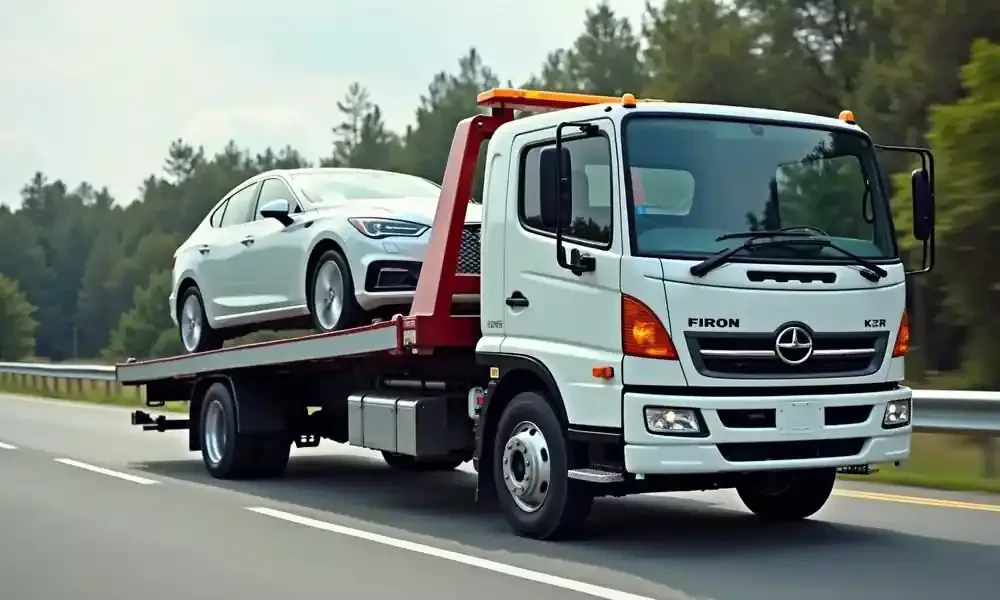

The capacity of a recovery operation depends entirely on what the operator has available when they arrive at the scene. A professional tow truck carries a defined set of tools and equipment that covers the range of situations encountered across standard roadside call-outs. Missing a critical piece of equipment at the point of need forces the operator to return to the depot, delays resolution for the vehicle owner, and extends exposure to traffic risk for all parties present at the roadside location. Equipment carried onboard is a direct indicator of the operator’s preparation level and the operational standard maintained across all dispatch categories.
Safety zone equipment
High-visibility vests, warning triangles, traffic cones, and emergency lighting equipment are non-negotiable for any operator attending a roadside location. These items establish the protected work zone that keeps the operator, vehicle owner, and approaching traffic separated during the recovery process.
- Wheel chocks prevent vehicle movement during loading and rigging at all recovery points, regardless of surface gradient.
- Fire extinguishers address fuel ignition risk at accident scenes where spillage has occurred before recovery begins.
- First aid kits cover minor injuries sustained at the scene before emergency medical services arrive to take over care from the attending operator.
- Road flares or LED warning lights extend advanced notice for approaching traffic at night or in conditions where standard reflective triangles do not provide sufficient visibility for drivers at speed on open highway sections.
Operators attending highway locations carry additional cone sets and barrier tape to define a larger protected zone around the active recovery area with greater separation from live traffic lanes.
Mechanical recovery tools
A vehicle recovery system includes tow straps, shackles, snatch blocks, and winch lines. A jump start cable or portable battery pack can be used to resolve dead battery situations on the spot without requiring a tow truck. Tools such as hydraulic jacks, breaker bars, and torque wrenches are used for replacing flat tyres on vehicles with serviceable spares. For vehicles whose keys are locked inside the cabin, lockout entry tools provide access to the doors. Fuel containers are designed to transport dry-tank vehicles to a nearby fuel station without requiring a full tow.
Documentation systems
Job sheets, condition report forms, and camera equipment support the documentation requirements that accompany every recovery. In addition to taking photographs of the vehicle, all relevant information is recorded, including information about the vehicle, the owner’s contact information, the pickup location, and the destination. Documentation protects the operator from claims of damage and provides the vehicle owner with a written record of services performed. Digital platforms allow dispatch to receive real-time updates on jobs, and recovery site condition photographs can be uploaded directly to dispatch.
Onboard equipment defines the operational scope of any tow truck attending a roadside situation. Safety tools, mechanical recovery equipment, and structured documentation systems together determine whether the operator can resolve the incident efficiently at the scene or requires additional time and resources to complete the job to a satisfactory standard for the vehicle owner and any insurance coordinators overseeing the recovery outcome from initial call through to final delivery confirmation.






Leave a Comment