

Conveyor systems are among the most demanding structures in any production or logistics environment. They carry constant dynamic load, operate continuously over long periods, and are expected to maintain precise alignment to keep products moving correctly. The choice of framing material and construction method has a direct bearing on how well a conveyor system performs over its working life and how easily it can be maintained, extended, or reconfigured as production requirements change.
Aluminium profile has become the dominant framing material for conveyor construction across UK manufacturing, and this article explains why, covering the design principles, key components, and practical considerations involved in building conveyor structures from aluminium profile.
Why Aluminium Profile Suits Conveyor Construction
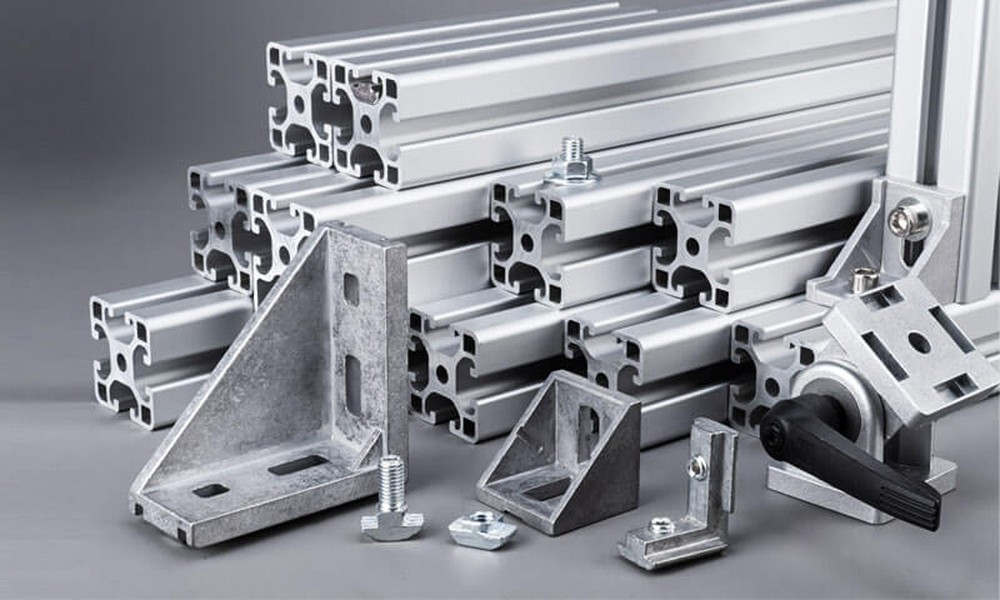
The properties that make aluminium profile well suited to industrial framing generally are particularly valuable in a conveyor context. The dimensional precision of extruded profiles ensures that conveyor frames can be built to tight alignment tolerances without shimming or grinding, which is critical for smooth belt or roller operation. The modular connector system allows conveyor sections to be extended or reconfigured when production layouts change, without replacing the entire frame. The light weight of aluminium compared to steel reduces the structural requirements of floor mounts and supports, and makes individual sections easier to handle during installation and maintenance.
Corrosion resistance is another practical advantage. In food production, pharmaceutical manufacturing, and other environments where regular washdown with cleaning agents is routine, the anodised surface of aluminium profile withstands repeated chemical exposure without degradation. A comprehensive range of aluminium profile systems and components covering all the structural and accessory elements required for conveyor framing is available from specialist UK suppliers.
Structural Design Considerations
The structural design of an aluminium profile conveyor frame must account for the dynamic loads imposed by the belt or rollers, the weight of products being conveyed, and any additional loads from guarding, sensors, or equipment mounted on the frame. Profile section size selection should be based on the span between supports, the total load per metre of conveyor run, and any point loads from drive units or tensioning mechanisms.
For most light to medium duty conveyor applications, 40mm or 45mm series profiles provide adequate structural performance. Heavier duty applications with longer unsupported spans or higher product weights may require 60mm or 80mm series profiles, or the use of additional intermediate support legs to reduce the effective span. Published section property data for aluminium profile, including second moment of area and section modulus values, allows deflection and stress calculations to be performed for any specific loading condition.
Key Components in a Profile Conveyor Frame
A conveyor frame built from aluminium profile draws on several component categories beyond the structural profiles themselves:
- Leg and support assemblies: adjustable feet allow the conveyor to be levelled on uneven floors and provide vibration isolation; fixed or swivel castors allow repositionable conveyor sections to be moved within the production cell
- Cross-member connections: the connections between longitudinal rails and cross-members must be rigid enough to maintain frame geometry under dynamic load; internal anchor connectors provide the strongest connection at profile ends, while gusset plates add rigidity at corners
- Roller and belt mounting: T-slot channels allow roller brackets, belt tensioners, and guide rails to be positioned and adjusted without drilling; this is particularly valuable during installation and commissioning when conveyor alignment is being set
- Guarding integration: side guards, end stops, and overhead guarding can be mounted directly to the conveyor frame structure using the same T-slot system, keeping the guarding integral with the conveyor rather than separately supported
Modular Design and Future Flexibility
One of the most compelling arguments for aluminium profile over welded steel in conveyor construction is what happens when the conveyor needs to change. Production layouts in manufacturing facilities evolve continuously, driven by new products, process improvements, and changes in throughput. A welded steel conveyor frame is largely committed to its original configuration; lengthening, shortening, or changing the height of a welded frame involves cutting and rewelding, with all the cost and disruption that entails.
An aluminium profile conveyor frame can be extended by adding additional sections with the same connector system, shortened by removing sections, or raised and lowered by adjusting the leg assemblies. Drive units and tensioning mechanisms can be repositioned along the T-slot channels without new fixings. This flexibility has real financial value over the operating life of a production facility where conveyor configurations change as product mix and volumes evolve.
Frequently Asked Questions
What profile series is most commonly used for conveyor framing?
40mm and 45mm series profiles cover the majority of light to medium duty conveyor applications; 60mm and 80mm sections are used for wider conveyors, longer unsupported spans, or higher product load requirements.
Is aluminium profile suitable for conveyors in food production environments?
Yes, the anodised surface of aluminium profile is resistant to food-safe cleaning agents, does not corrode, and does not create crevices that harbour bacteria when correctly designed; aluminium profile conveyors are widely used in food, beverage, and pharmaceutical manufacturing.
How are conveyor rollers and belt supports mounted on aluminium profile frames?
Roller brackets and belt support components are mounted using T-nuts and bolts in the profile slots, allowing infinite positioning adjustment along the frame length without drilling; this makes installation and subsequent alignment adjustment straightforward.
Can aluminium profile conveyor frames be extended after initial installation?
Yes, and this is one of their primary practical advantages; additional sections can be joined to existing frame ends using the same connector system, with no welding or specialist fabrication required.
Final Thoughts
Aluminium profile conveyor framing delivers precision, flexibility, and long-term adaptability that welded steel construction cannot match for most industrial conveyor applications. The modular system allows conveyors to be built quickly, aligned accurately, and modified efficiently as production requirements change, which in a dynamic manufacturing environment represents a meaningful operational and financial advantage.
For UK production engineers, facilities managers, and systems integrators designing or upgrading conveyor systems, sourcing from a specialist in industrial aluminium profile systems and conveyor components provides the product range and technical support needed to build conveyor frames that perform reliably and adapt as requirements evolve.





Leave a Comment